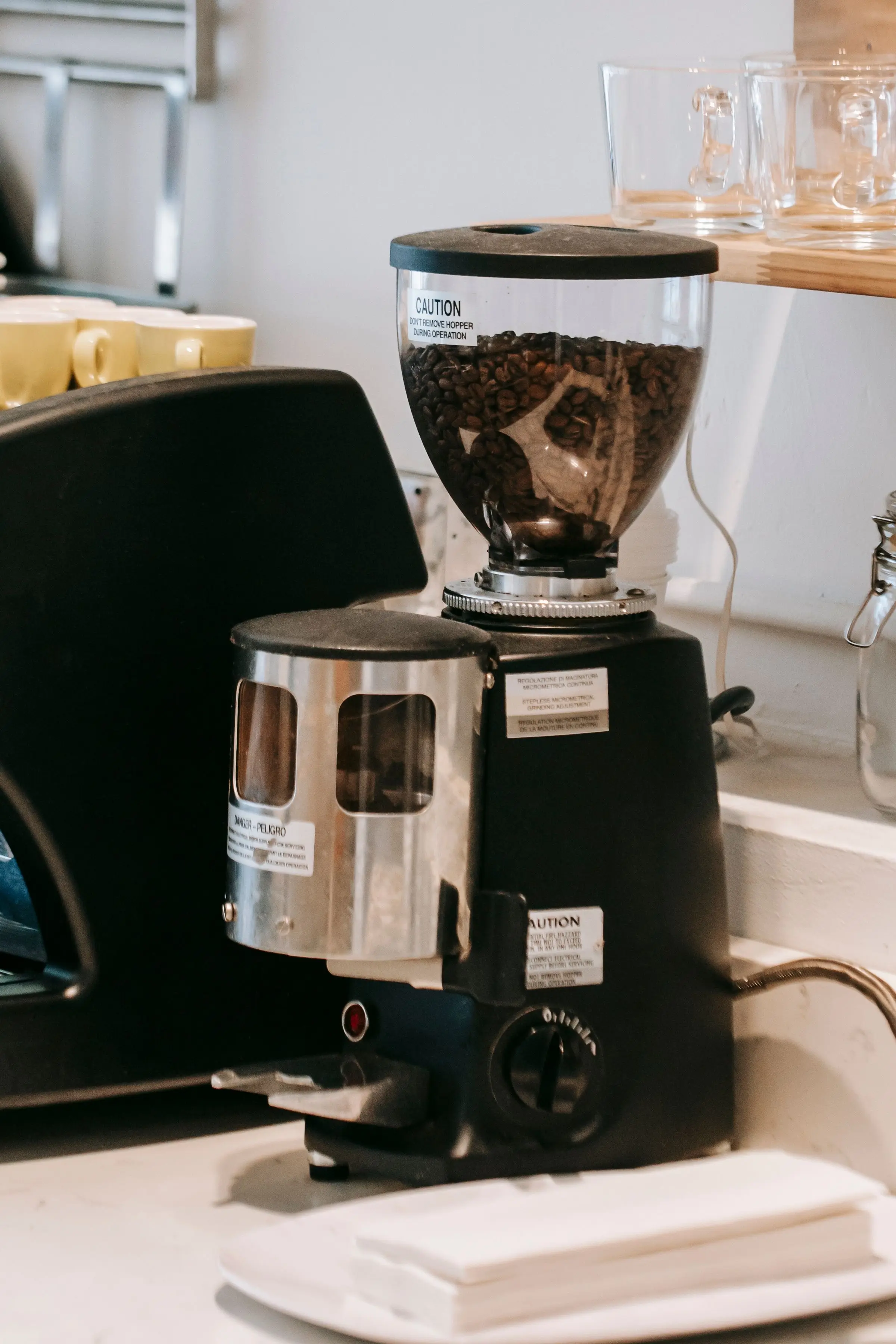
A burr grinder crushes beans between two burrs at a setting you choose and keeps that setting, which is the part espresso depends on. Eight of them have a page on this site, from an £89 hand grinder to a 5.6 kg electric one, and they sort by worktop space, by whether you turn the handle yourself, and by how the maker doses the coffee.
These are the grinders we cover, not the whole UK market.
The eight, side by side
| Grinder | Hand or electric | Grinds for | Adjustment | Dosing | W x D x H (mm) | UK warranty | UK price, 21 September 2026 |
|---|---|---|---|---|---|---|---|
| Baratza Encore ESP | Electric | Espresso and filter | Stepped, 40 settings | Hopper, 300 g | 130 x 150 x 340 | 2 years | £154.95 to £159.95 |
| Eureka Mignon Specialità | Electric | Espresso and filter | Stepless | Timed, 300 g hopper | 120 x 140 x 350 | 2 years | £369 to £444.61 |
| Kingrinder K6 | Hand | Espresso and filter | Stepped, 60 clicks | Single dose, 30 g | not published | not published | £99 |
| Niche Zero | Electric | Espresso and filter | Stepless | Single dose | 122 x 211 x 311 | 1 year | maker price only, below |
| Sage Dose Control Pro | Electric | Espresso and filter | 60 settings | Timed, 340 g hopper | 204 x 160 x 342 | 2 years | maker price only, below |
| Sage Smart Grinder Pro | Electric | Espresso and filter | 60 settings | Timed, 450 g hopper | 215 x 160 x 389 | 2 years | £189.95 |
| Timemore Chestnut C3 ESP Pro | Hand | Espresso and filter | Stepped, 36 settings | Single dose, 20 g | not published | not published | £89 to £115 |
| Wilfa Uniform | Electric | Espresso and filter | Stepped, 41 settings | 75 g hopper | not published | 5 years | £239 to £305 |
Three of the eight come with no published dimensions: Timemore, Kingrinder and Wilfa. Timemore and Kingrinder also publish no UK warranty term, so on those two you are buying without knowing either the footprint or the cover. Wilfa is the opposite case, a five year warranty and no height, width or depth. One maker out of eight publishes a noise figure.
What each maker says it grinds for
None of the eight is sold as espresso only or filter only. Every maker claims both ends, so the question is not whether a grinder reaches espresso fineness but how finely it is divided near that end.
Baratza’s manual for the Encore ESP is the clearest about it: the 40 clicks split into an espresso range of settings 1 to 20 and a filter range of 21 to 40. Half the dial is espresso, which is unusual at this price. Niche’s page for the Zero puts it the other way round, as one dial you move between the two in seconds.
Timemore sells the Chestnut C3 ESP Pro across espresso, pour-over and French press. Kingrinder says both the K4 and the K6 serve espresso, and calls the K6 the one for pour-over. If you only ever make filter coffee, most of a 60-click espresso range is fineness you will not use.
If you would rather not plug anything in
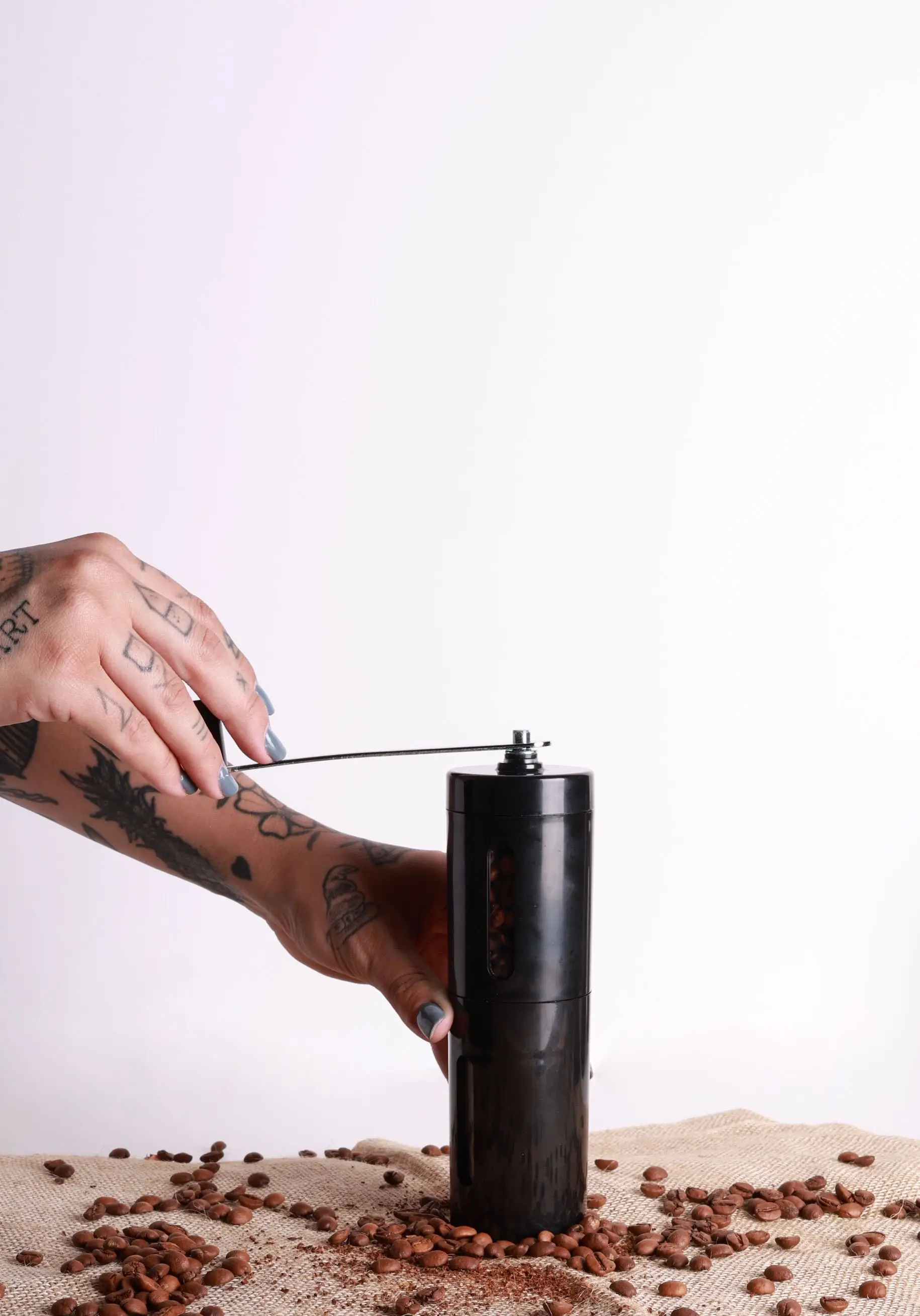
Two of the eight are hand grinders, and they are also the two cheapest. The Timemore Chestnut C3 ESP Pro was £89 to £115 and the Kingrinder K6 was £99 on 21 September 2026. Both are single dose, so you put in the beans for one drink and grind all of them.
The trade is capacity and effort. Timemore’s capacity is 20 g per fill and Kingrinder’s is 25 to 30 g, which is one or two espresso doses before you refill. Burr size goes with the body size: Timemore gives the C3 ESP Pro a 38 mm stainless steel conical burr, against 55 mm flat on the Eureka and 63 mm conical on the Niche. Best budget espresso grinders goes into what the missing motor costs you in practice.
If the worktop is the limit
Five of the eight publish dimensions, and the narrowest is the Eureka Mignon Specialità at 120 mm wide by 140 mm deep. The Niche Zero is barely wider at 122 mm but 211 mm deep, because the catch cup sits out in front.
Height is the figure that catches people out under a wall cupboard. The Sage Smart Grinder Pro stands 389 mm tall, the Eureka 350 mm, the Baratza Encore ESP 340 mm. Measure the gap under the cupboard before you order, and remember you have to lift a hopper lid on the ones with hoppers.
Weight is published by two makers only: 4.1 kg for the Niche Zero and 5.6 kg for the Eureka. Neither is a grinder you will move to a cupboard between drinks.
Stepped clicks or a stepless dial
Four are stepped, which means the adjustment moves in fixed clicks and you can count your way back to a setting that worked. The counts run 36 on the Timemore, 40 on the Baratza, 41 on the Wilfa Uniform and 60 on the Kingrinder.
Two are stepless. Eureka’s page for the Specialità calls it a micrometric regulation system, and the Niche Zero uses an infinite stepless dial. Stepless lets you land between two clicks, which matters most when a bean is fighting you at the espresso end. It also means there is no number to write down, only a mark on the dial.
Sage publishes 60 settings for both its grinders but never says whether they click, which is why the column above gives the count for those two without the word stepped.
Single dose or a hopper
Three of the eight are single dose: the Niche Zero and the two hand grinders. You weigh the beans for the drink, tip them in and get almost all of them back. Nothing sits in a hopper going stale, and swapping between an espresso bean and a filter bean takes one refill.
The rest hold beans on top. Baratza’s page for the Encore ESP pairs its 40 mm conical steel burrs with a 300 g hopper and a 550 rpm motor rated at 70 W, the lowest of the four electric grinders whose makers publish a wattage. Capacities run 75 g on the Wilfa, 300 g on the Baratza and the Eureka, 340 g on the Sage Dose Control Pro and 450 g on the Smart Grinder Pro, which is Sage’s 450 g bean capacity figure for that model. A big hopper suits a household that drinks one bean steadily. It suits nobody who buys 250 g bags of three different coffees.
Eureka and both Sage grinders dose by time rather than by weight, so the amount in the basket shifts a little as the beans age and as the grind setting changes.
Noise, where anyone publishes it
One figure exists across all eight. Niche gives 72 dB during grinding for the Zero. Nobody else publishes a number, so there is no honest way to rank the other seven for noise, and we will not invent one. Flat burrs usually spin faster than conical ones, and the Eureka’s 1,350 rpm against the Baratza’s 550 rpm is the only speed comparison the makers make possible here.
Warranty runs from nothing published to five years
This is the widest spread in the table. Wilfa gives five years on the Uniform, stated on Wilfa’s UK page for the Uniform. Baratza and both Sage grinders give two years. The Eureka’s two years in the UK comes from the seller rather than the maker, under Bella Barista’s back to base warranty. Niche gives one year. Timemore and Kingrinder publish no UK term at all.
A five year term on a £239 grinder and no published term on a £99 one is a real difference in what you are buying, and it is the kind of thing that does not appear in a star rating.
What the prices look like
The checked ranges run from £89 to £115 for the Timemore up to £369 to £444.61 for the Eureka, all on 21 September 2026. Two grinders have no range checked across retailers. Niche’s shop listed the Zero at £559.00 and Sage listed the Dose Control Pro at £169.95 on that date, each a single maker price rather than a range, so treat them as a starting point and shop them yourself.
If you are buying a grinder because your machine does not have one, best espresso machines under £500 shows how much of that budget the grinder quietly takes. If you would rather the machine did the grinding, coffee machines with a grinder built in covers that route, and the Sage Barista Express against the Bambino Plus is the clearest case of the same maker selling both. Blade against burr grinders explains why nothing cheaper than these is on the list.