Thirteen espresso machines have a page on this site, and choosing between them nearly always comes down to something you can measure: counter space, whether you want to steam the milk yourself, and whether the grinder is in the box. So they are sorted below by those questions instead of by a score.
These are the machines we cover. They are not the whole UK market.
The thirteen, side by side
Sizes are the maker’s own printed width, depth and height.
| Machine | Grinder built in | Milk | W x D x H (mm) | Tank | Heat-up | UK price, 21 September 2026 |
|---|---|---|---|---|---|---|
| De’Longhi Dedica Style | No | Manual wand | not published | 1.1 L | not published | £179 to £179.90 |
| Smeg 50’s Style Espresso | No | Manual wand | 149 x 329 x 330 | 1.1 L | not published | £299.95 |
| Sage Bambino | No | Manual wand | 302 x 154 x 342 | 1.4 L | 3 s | £329 to £329.95 |
| Sage Bambino Plus | No | Automatic wand | 194 x 362 x 304 | 1.9 L | 3 s | £349.95 to £399.95 |
| Ninja Luxe Café Premier | Yes | Automatic wand | 336 x 344 x 372 | 2 L | not published | £499 to £499.99 |
| Sage Barista Express | Yes | Manual wand | 318 x 351 x 404 | 2 L | not published | £499.95 |
| Gaggia Classic E24 | No | Manual wand | 200 x 270 x 355 | 2.1 L | not published | £549 |
| Sage Barista Pro | Yes | Manual wand | 408 x 350 x 332 | 2 L | 3 s | £599.95 |
| Sage Barista Express Impress | Yes | Manual wand | 422 x 367 x 310 | 2 L | 55 s | £714.99 to £729.95 |
| Sage Barista Touch | Yes | Automatic wand | 400 x 319 x 314 | 2 L | 3 s | £1,049 to £1,049.95 |
| De’Longhi La Specialista Maestro | Yes | not published | 360 x 365 x 470 | 2.5 L | 20 s | £1,299 to £1,299.99 |
| Sage Oracle Jet | Yes | Automatic wand | 422 x 360 x 378 | 2.3 L | not published | £1,699.95 |
| Sage Dual Boiler | No | Manual wand | 379 x 403 x 371 | 2.5 L | not published | not published |
If counter space is the limit
The narrowest printed width here is the Smeg at 149 mm, then the Bambino Plus at 194 mm and the Gaggia Classic E24 at 200 mm. All three are deep rather than wide, which suits a run of worktop between a wall and a hob.
Watch the Sage pair. Sage labels both fields “Dimensions (WxDxH)”, and on those printed figures the Bambino reads 302 x 154 x 342 mm while the Bambino Plus reads 194 x 362 x 304 mm. The two machines are close in size, so measure your gap both ways round before you commit to either.
Height decides whether a machine lives under a wall cupboard. The La Specialista Maestro is the tall one at 470 mm, then the Barista Express at 404 mm. The Oracle Jet and the Impress are the widest at 422 mm each. De’Longhi publishes no dimensions at all for the Dedica, so that one has to be measured in a shop.
If you want the milk made for you
Four machines here steam and texture milk on their own: the Bambino Plus, the Barista Touch, the Oracle Jet and the Ninja Luxe Café Premier. Ninja’s page describes its system as a “Hands-free Dual Froth System: Steams & whisks milk at same time with 4 auto presets.”
The other eight give you a manual wand, so the froth is your job. That difference is set out in the Bambino Plus and Gaggia Classic comparison and in the Barista Pro against the Barista Touch. De’Longhi does not publish a milk system for the La Specialista Maestro.
If you want one box instead of two
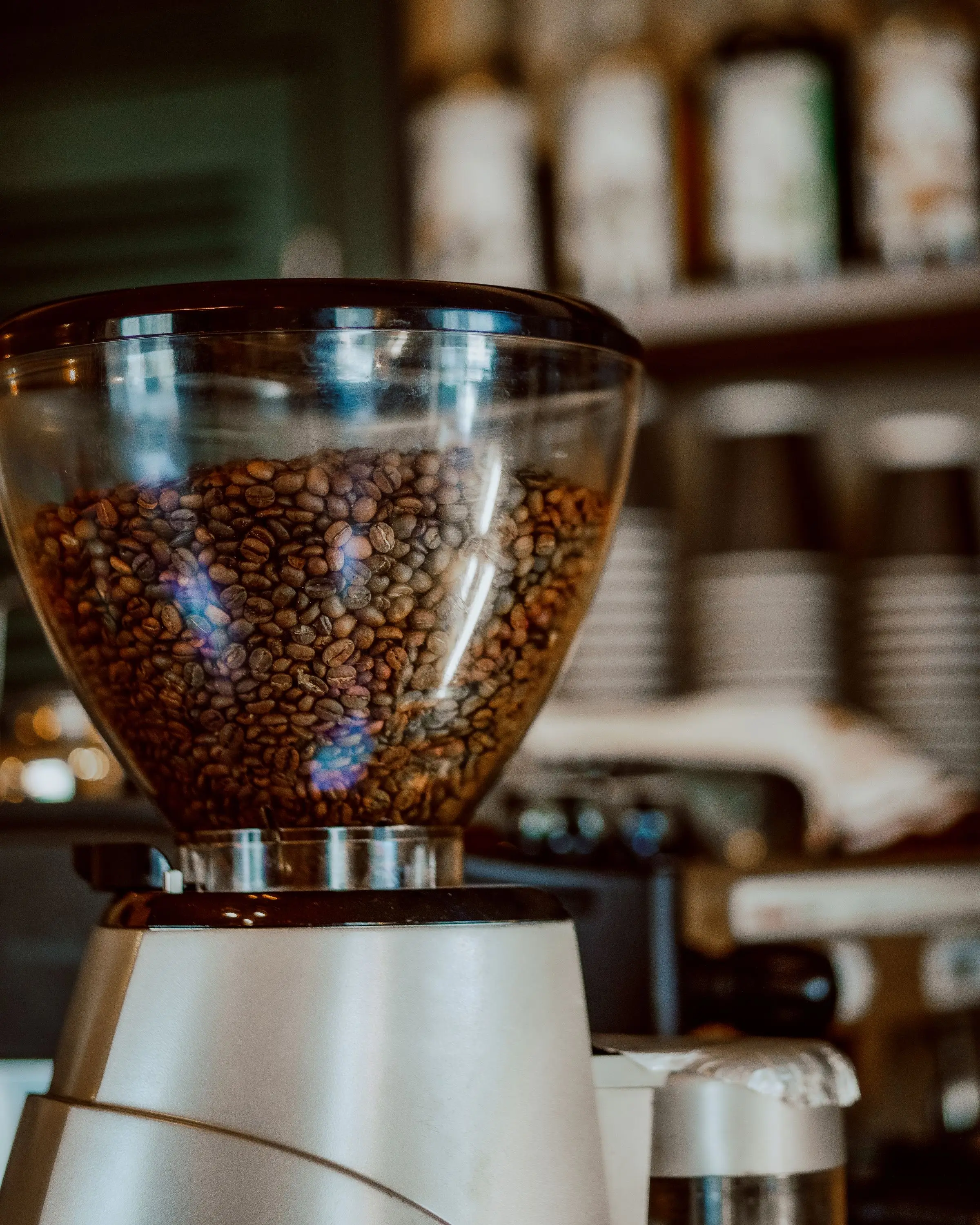
Seven machines grind their own beans. The hopper holds 250 g on the Barista Express, the Impress, the Barista Pro, the Barista Touch and the La Specialista Maestro, and 340 g on the Oracle Jet. Ninja publishes no hopper capacity.
Grind settings run from 15 on the La Specialista Maestro and 16 on the Barista Express to 25 on the Impress and the Ninja, 30 on the Barista Pro and the Barista Touch, and 45 on the Oracle Jet. More steps mean finer control of the shot, not better coffee on their own. The Barista Express against the Barista Pro and the Barista Express against the Ninja Luxe Café go further into what those grinders do differently.
The six machines without a grinder need one bought alongside, which is a real cost. Blade against burr grinders covers that choice.
If this is your first espresso machine
Start with the basket. A pressurised basket, which Sage calls dual wall, holds the coffee back so a rough grind still makes crema. A non-pressurised or single wall basket gives you no such help and needs a grinder you can adjust. Sage supplies both kinds with the Bambino, the Bambino Plus, the Barista Express, the Impress, the Barista Pro and the Barista Touch. Smeg’s filter list has double wall baskets and a paper pod filter only, so that machine stays forgiving. The Oracle Jet goes the other way and supplies single wall baskets alone. Portafilter sizes explained covers the 51, 54 and 58 mm fittings behind those baskets.
The box is not the same from brand to brand.
- Sage lists “included accessories: single wall 1 and 2 cup filter baskets dual wall 1 and 2 cup filter baskets 480ml stainless steel milk jug aluminium portafilter plastic tamper” for the Bambino, a “16 fl.oz / 480ml stainless steel milk jug” with the Bambino Plus, and a “stainless steel milk jug” with the Barista Express.
- Ninja’s box list reads “in the box portafilter milk jug single basket double basket luxe basket assisted tamper funnel”.
- De’Longhi’s La Specialista Maestro page lists “accessories coffee tamper tamping station milk jug”.
- Gaggia’s Classic E24 tech list gives “included accessories plastic tamper; 3 filters”. No jug.
- Smeg’s instruction manual lists “accessories included: measuring/tamping scoop” and the filters. No jug.
- De’Longhi’s Dedica manual lists “c10. milk jug (only in certain models)”, so check the box before you buy a jug or assume you have one.
Heat-up time is published for six of the thirteen. The Bambino, the Bambino Plus, the Barista Pro and the Barista Touch are quoted at 3 seconds, the La Specialista Maestro at 20 seconds and the Impress at 55 seconds. Nobody else gives a figure, so treat silence as unknown rather than slow. How to use an espresso machine walks through the first shot once the machine is on the counter.
If you plan to keep it a long time
Warranty runs 24 months in the UK on the Sage machines, the Smeg and the Ninja. The Gaggia Classic E24 carries three years on the UK distributor’s own page, the longest here. De’Longhi publishes no term in months for either of its machines, which is the gap to ask a retailer about.
Sage asks for a new water filter every three months across its range, Ninja every two. The Dual Boiler holds 2.5 L, the largest tank here alongside the La Specialista Maestro.
If the budget stops at £500
Six of these machines sat under £500 at every retailer checked on 21 September 2026, and two of them grind their own beans. Best espresso machines under £500 works through that group and the cost of the grinder you still need.
Where the gaps are
De’Longhi leaves out the most: no dimensions, heat-up time, warranty term or portafilter diameter for the Dedica, and no warranty term for the La Specialista Maestro. Ninja publishes no pump pressure, heating system or portafilter size, and Gaggia no heat-up figure. Sage publishes the fullest specification of the six brands here.